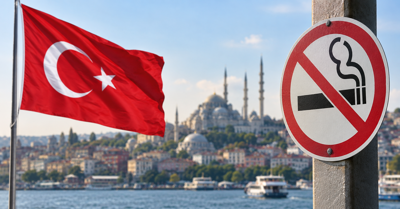
Turkey’s ruling party and Health Ministry are reportedly preparing a nationwide tobacco sales ban beginning Jan. 1, 2040, according to a Sept. 15 report by Azernews. The proposed definition of tobacco products would also cover e-cigarettes, heated tobacco products, hookahs, and products containing synthetic nicotine, not just cigarettes.
But the deadline is not a new development. On April 10, Turkish newspaper Yeni Şafak reported obtaining a 41-article draft with a 2040 prohibition target and provisions covering vaping products. Azernews describes legislation awaiting submission, rather than an enacted law. Türkiye newspaper reported on Sept. 13 that the draft is expected to be reviewed by the AK Party parliamentary group in October, with the goal of bringing it before Parliament in November. A publicly available draft and confirmation of its submission to parliament could not be independently verified.
The reported proposal would reach beyond retailers to individual consumers. Hürriyet Daily News reported on April 10 that purchasing or possessing tobacco products after the ban would carry fines of 50,000 to 250,000 Turkish liras. Importing, manufacturing, transporting, or selling them would trigger judicial fines of 1 million to 5 million liras. The reported amounts would be adjusted for inflation.
Before the proposed sales cutoff, smoking restrictions would expand to outdoor restaurant and café areas, sports facilities, places of worship, and educational and healthcare premises. Azernews says cafés and restaurants could retain physically separated smoking sections, but could not serve food or drinks there. Beach smoking would be confined to cabins at least 200 meters apart.
Tobacco purchases would be recorded electronically through a monitoring system intended to track distribution and combat illicit trade. The report also describes a 5,000-lira fine for smoking in prohibited public areas. Businesses would face financial penalties, with repeated violations potentially bringing temporary closure or loss of operating licenses.
Turkey’s existing vape restrictions already include an import prohibition. In an April 14 parliamentary response, the Trade Ministry cited a 2020 decision that prohibits imports of e-cigarette devices and heated tobacco products. That official response also described continuing customs seizures. It did not establish the proposed 2040 sales or possession penalties.
The inclusion of vaping products raises a separate smoking-cessation question. In an Aug. 26 evidence update, Cochrane reported high-certainty evidence that nicotine e-cigarettes helped more people quit smoking than nicotine replacement therapies such as patches and gum. Researchers also said longer-term safety studies were needed. That evidence distinguishes nicotine vaping from combustible tobacco in the context of smoking cessation.
As described, the proposal would do more than restrict where people can smoke. It would penalize buying and possessing covered products, too, including vaping products if the expanded definition is adopted as reported. Whether that approach reaches Parliament and survives in the final text still requires official confirmation.

Learn how old you have to be to buy caffeine pouches, including federal and state age restrictions, retailer policies, and rules for minors.

Learn whether caffeine pouches are safe, including potential side effects, caffeine limits, oral health risks, and who should avoid them.

Because of declining cigarette sales, state governments in the U.S. and countries around the world are looking to vapor products as a new source of tax revenue.

A list of vaping product flavor bans and online sales bans in the United States, and sales and possession bans in other countries.