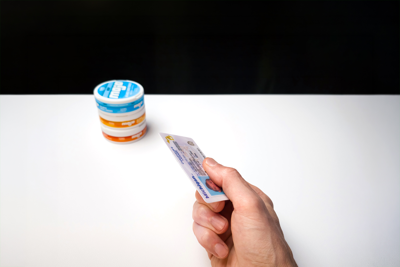
As of September 2026, the U.S. federal government has no minimum age limit for purchasing caffeine pouches. Some may find this surprising since they closely resemble nicotine pouches like ZYN. However, caffeine pouches do not contain nicotine, meaning they are not subject to the federal Tobacco 21 law, which prohibits tobacco sales to anyone under 21.
Still, a lack of federal restrictions does not mean minors can buy caffeine pouches everywhere. State laws and retail policies differ and may impose their own age restrictions.
Keep reading to learn more about caffeine pouch age requirements, state and federal laws, and concerns surrounding their use among teenagers.
Why don’t you have to be 21 to buy caffeine pouches?
Federal law regulates caffeine and tobacco products differently.
The FD&C Act defines a tobacco product as any product made or derived from tobacco, or containing nicotine from any source, that is intended for human consumption. Under the Tobacco 21 law, retailers are federally prohibited from selling these products to anyone under 21. Nicotine-free caffeine pouches do not meet the tobacco product criteria, even though they use the same format and some of the same ingredients as nicotine pouches.
In contrast, the FDA may regulate caffeine-containing products as conventional foods or dietary supplements, depending on the product. A federal minimum purchase age does not currently restrict these categories. However, federal regulations still govern their ingredients, safety, and labeling.
Essentially, a product’s ingredients and regulatory classification determine the age restriction. The pouch format is irrelevant.
Do states have age restrictions on caffeine pouches?
While there is no federal age limit for purchasing caffeine pouches, individual states can set their own restrictions. At the time of writing, we couldn’t identify any states with a minimum purchase age specifically for caffeine pouches. However, Delaware and New York have proposed new labeling and disclosure requirements for high-caffeine products.
- In April 2026, Delaware lawmakers introduced a bill that would prohibit retailers from selling energy drinks or caffeinated dietary supplements to minors. Ultimately, lawmakers removed the age restriction and instead proposed requiring retailers to display warning signs next to these products stating that they aren’t recommended for children and certain other groups.
- In New York, Senate Bill S9158 would require caffeine safety warnings and labeling for foods and dietary supplements containing certain amounts of caffeine. Products with more than 100 mg per serving would be marked “not recommended for sale to persons under eighteen years of age.” Products containing added caffeine or at least 150 mg per serving would carry an additional “high caffeine” designation.
Neither proposal specifically targets caffeine pouches or currently imposes a minimum purchase age. But they do highlight a developing state-level interest in regulating high-caffeine products and their use by minors. Broader legislation could potentially apply to caffeine pouches as well, depending on how they are classified.
Do stores require ID to buy caffeine pouches?
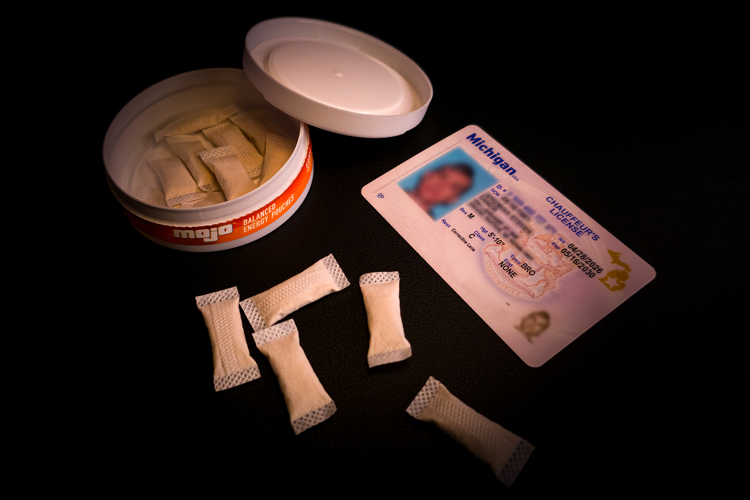
In some cases, yes. Stores are not legally required to impose age limits for caffeine pouches, but they can enforce their own policies. For instance, Nectr, a popular caffeine pouch manufacturer, requires buyers to be 18 years or older for online purchases. This requirement may not be common practice in the retail space yet, but policies are always changing.
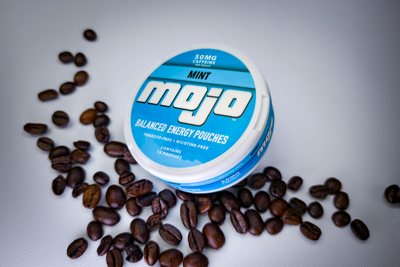
Other sellers and manufacturers take a different approach. Rather than prohibiting sales to minors, they include age recommendations and warnings, such as “Suggested age: 18 years and up” or “Keep out of reach of children.” Many manufacturers also market their products as “intended for healthy adults.” Mojo Energy Pouches states on its website: “there’s no age restriction… however, Mojo is not recommended for minors under 18.”
Sellers may or may not enforce these warnings and recommendations at the point of sale. Without a legal age requirement, whether ID is required depends on the retailer’s own policies and discretion.
Are caffeine pouches safe for teenagers?
We don’t know yet. Research on caffeine pouches is still scarce, so it’s hard to assess the real risks for any particular age group. But if we isolate caffeine from the delivery format, things become much clearer. Caffeine’s effects are well established, and health authorities have proposed intake levels for minors.
The European Food Safety Authority (EFSA) proposes 3 mg of caffeine per kg of body weight per day as a safety level for children and adolescents. Health Canada recommends a maximum daily intake of 2.5 mg/kg. The American Academy of Pediatrics (AAP) takes the most conservative approach: children should avoid caffeine entirely.
Based on those figures, a 110-lb (50-kg) teenager would reach 125 and 150 mg/day under Health Canada’s and EFSA’s guidance, respectively. Some caffeine pouches contain up to 200 mg, exceeding both figures with a single dose. Even a 100 mg pouch could account for most of that amount, especially when combined with other caffeine sources.
Caffeine use can be more concerning for young people for several reasons:
- Body weight: The same amount of caffeine represents a larger dose (relative to body weight) in a smaller person, potentially exceeding weight-based guidance for adolescents. Caffeine-related emergency room visits may be uncommon, but they are rising. A 2024 analysis found that rates more than doubled among children ages 11–14 and nearly doubled among those ages 15–18 between 2017 and 2023.
- Sleep impacts: Caffeine can disrupt sleep and make it more difficult to fall asleep. These effects are particularly relevant for adolescents, since poor sleep can negatively impact thinking, mood, academic performance, and overall health.
Stacking multiple caffeine sources is another reason for concern. A recent CDC analysis found that 65.5% of U.S. adolescents ages 12–19 consumed caffeine on a given day; sources include soda, tea, coffee, candy, and baked goods. Adding caffeine pouches to a child’s existing caffeine intake could push their daily total beyond EFSA’s and Health Canada’s advisement.
Overall, the available evidence does not establish a “safe” caffeine pouch dose specifically for teenagers. Still, weight-based guidance suggests that higher-strength pouches (or multiple low-strength pouches) could be problematic, especially when combined with other caffeine sources. To learn more about caffeine side effects, dosage, and potential risks, see our guide to caffeine pouch safety.
Why are caffeine pouches raising concerns about teen use?
Pouches are often appealing because they deliver caffeine quickly and easily. However, their simplicity may also lead to irresponsible use among young or inexperienced users. They’re also small and discreet, making their use less obvious to parents and teachers compared to caffeinated beverages.
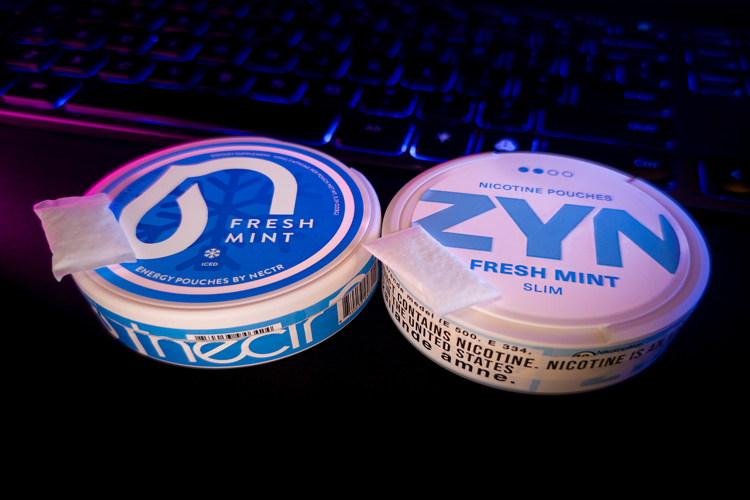
Caffeine pouches also strongly resemble nicotine pouches, and this ambiguity has raised concerns. NBC News reported in 2025 that high school students had been observed using caffeine pouches alongside nicotine pouches like ZYN. In some cases, students used the products together for complementary effects. In others, they used caffeine pouches to disguise prohibited nicotine pouches.
Social media marketing adds another dimension. Some caffeine pouch brands have promoted their products on platforms popular with younger audiences. Influencers often center the appeal around fitness, energy, focus, and productivity. “Wellness stacks”—a combination of nicotine and caffeine pouches for performance enhancement—is another growing trend on social media.
Caffeine pouches have also drawn criticism for their colorful packaging, appealing flavors, and youth-friendly branding. Some public health experts argue that these characteristics could make pouches more appealing to teenagers, echoing well-established concerns about nicotine pouches and vapes.
Wip, a popular caffeine pouch manufacturer, has attracted scrutiny because of CEO Richard Mumby’s history. Mumby served as chief marketing officer at Pax Labs when the company launched Juul, a hugely popular nicotine vape. Juul later faced criticism and legal action over its marketing and appeal to youth. His involvement with Wip has predictably prompted comparisons between the two products, although Wip clearly states its products aren’t intended for anyone under 18.
Currently, widespread caffeine pouch use among teenagers has not been established. Even NBC News notes that energy drinks and nicotine pouches remain more popular in schools, while reliable data on youth use is limited. For now, the concerns are largely preventative. Caffeine pouches are discreet, resemble nicotine pouches, and lack federal age restrictions. A growing social-media presence could fuel their appeal among younger users.
Could caffeine pouch age restrictions change?
While no federal age limit or age-restriction proposal exists yet, caffeine pouch age restrictions could change. It’s a unique product category with an undetermined regulatory future. Along with age limits, future regulations could potentially include labeling or marketing restrictions.
We do know the FDA is paying increased attention to caffeine labeling and foods marketed to children. In June 2026, it added “labeling caffeine content in foods and beverages” to its 2026 Human Foods Program (HFP) guidance agenda. But the planned guidance is expected to address disclosing added caffeine content rather than proposing an age limit. There is also no evidence that caffeine pouches prompted the initiative.
The proposed bills in Delaware and New York demonstrate that states are also scrutinizing youth caffeine use. Delaware eventually removed the age restriction from the bill, but it still shows that an 18+ age restriction is conceivable for certain caffeine products.
Ultimately, these political developments do not target caffeine pouches specifically, nor do they suggest that age limits are coming. Lawmakers appear more focused on the broad range of high-caffeine products than on pouches themselves. But if caffeine pouches become more popular among teenagers, their strengths, marketing, and resemblance to nicotine pouches could draw more regulatory attention.

UK officials will recruit 500 officers in a £500 million money-laundering crackdown that also targets criminal networks using rogue vape shops.

EU finance ministers postpone a tobacco tax vote until November as Sweden resists proposed higher taxes on nicotine pouches.

UK vape businesses face a new £2.20-per-10ml tax and duty stamp rules from Oct. 1, with HMRC warning manufacturers, importers, and retailers to prepare.

Two former YSK Enterprises directors were banned after a 2023 vape import scheme left nearly £15 million in unpaid UK taxes.
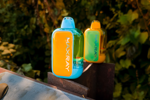
The MAXRAY RUSH 80K features a unique Juicy Guard system, 25 mL of e-liquid, a crystal-clear tank, and turbo mode. See how it performs in our full review.
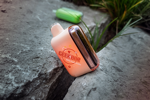
Is the GEEK BAR PULSE 2 better than the original? We test its battery, fast charging, flavors, performance, and more in our full review.

The TASTEFLEX CRESMO 80K is an innovative disposable vape, featuring E-VALVE technology, temp control, and three power levels. Read our review to learn more.
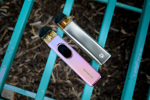
The sixth generation of XROS pod vapes has arrived! Our VAPORESSO XROS 6 and XROS 6 MINI review covers performance, flavor, battery life, and overall value.