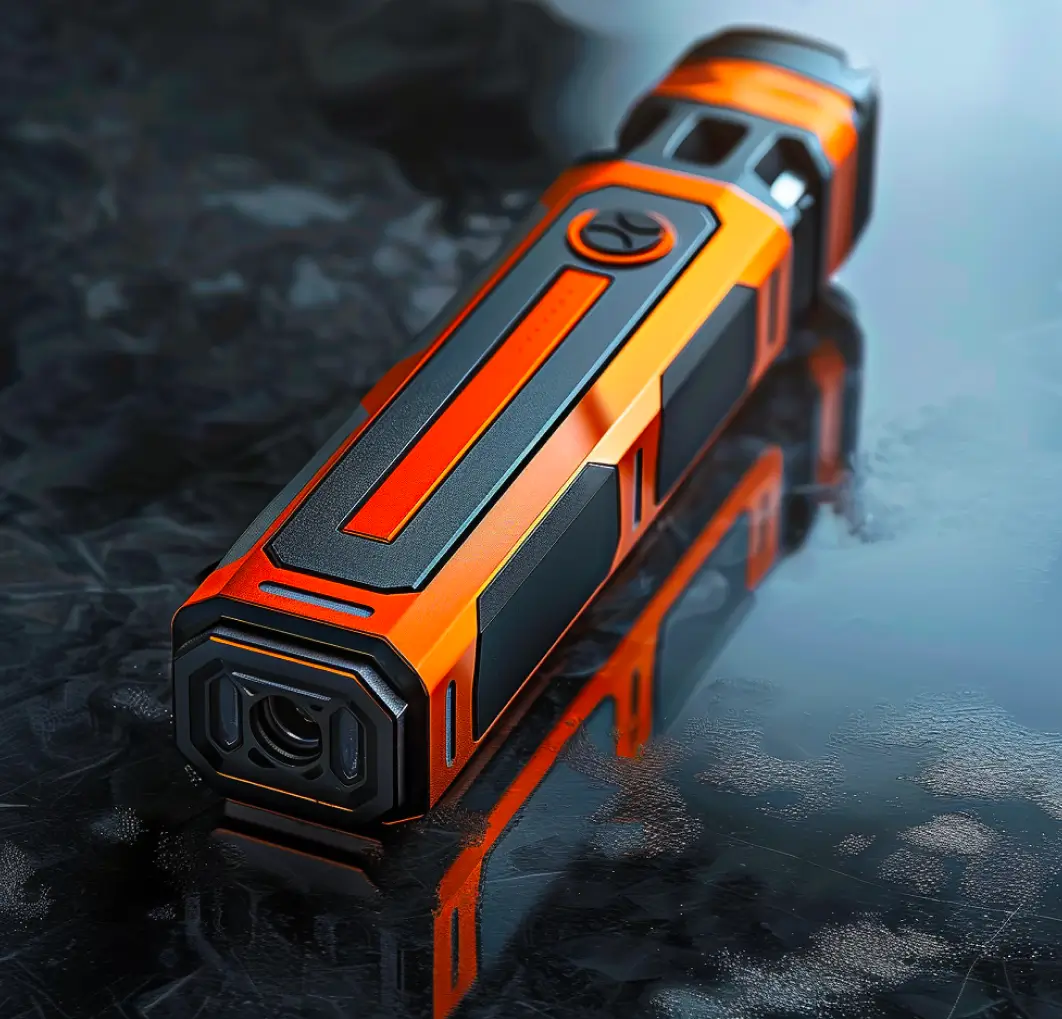
ThunderCloud x Vaping Bogan Bonza Pro RTA
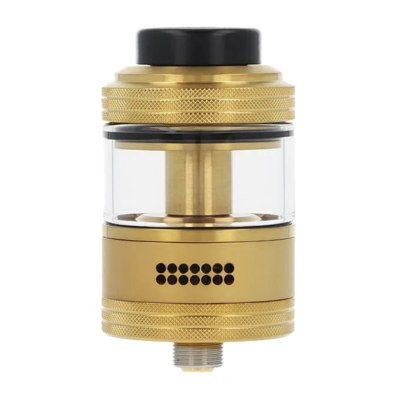
The ThunderCloud Bonza Pro RTA is a rebuildable tank atomizer with a 26 mm diameter, stainless steel construction, and 4 mL e-liquid capacity, expandable to 6 mL with the included bubble glass. It features a postless single or dual-coil build deck, quarter-turn top fill, adjustable airflow, and a 510 connection.
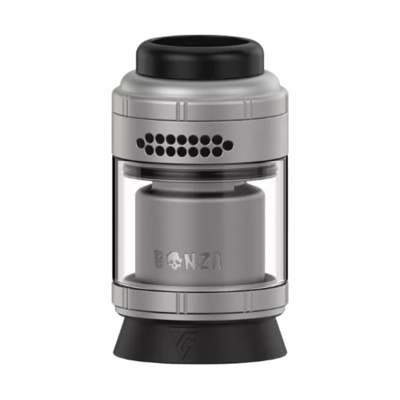

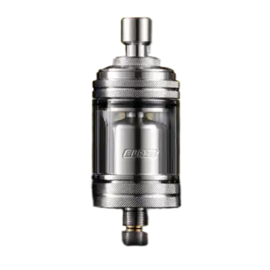


RTAs (rebuildable tank atomizers) combine the convenience of a tank with the versatility of a build deck. From compact MTL tanks to large DL designs, they come in countless styles and capacities, with different build decks and airflow systems. RTAs may just be the optimal vape tanks for convenience, performance, and control of your vape!
RDTAs (Rebuildable dripping tank atomizers) are closely related. Their style and build decks are similar to RTAs, but the wicking system is different. They’re essentially RDAs with a large tank underneath the deck. Some of the best RDTAs can provide a dripper-style experience in terms of flavor, but with considerably more liquid capacity.
Whether you’re using pod vapes or sub ohm tanks and considering making the jump to rebuildables, or you’re an experienced builder looking to upgrade, this guide has you covered. Our picks include the best RTAs and RDTAs available; everything from easy single-coil designs to high-performance options that rival the flavor of many RDAs.

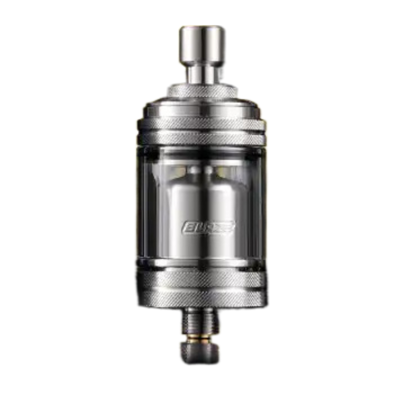
What is an RTA?
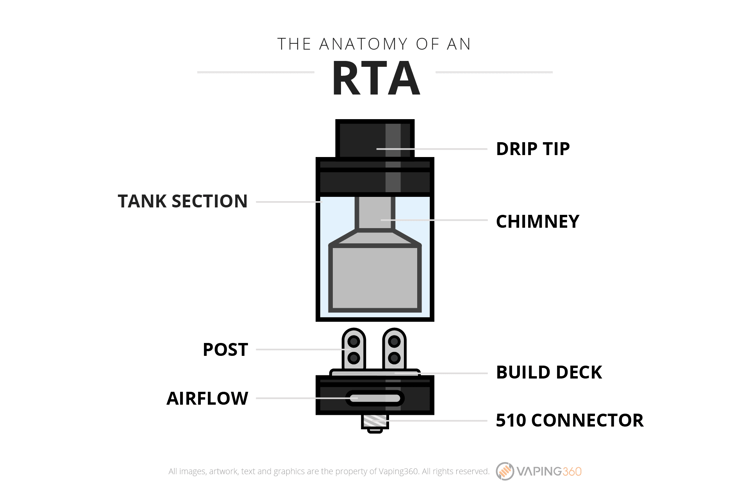
An RTA is a rebuildable atomizer that utilizes a tank section. It consists of a build deck that also houses wicking channels, a chimney that connects the build deck to the top cap, a glass or plastic tank, and a drip tip.
Most RTAs have adjustable airflow, usually in the form of a ring placed under or over the tank section. Many newer atomizers also offer additional airflow adjustment options (such as pins) that modify how air hits the coils inside the deck.
How does an RTA work?
The way an RTA works is relatively simple. The user needs to build a coil (or multiple coils, depending on the design) and install it on the atomizer’s build deck. After the coil is ready, it needs to be wicked, usually with cotton. The cotton tails are then placed in the wicking holes of the build deck.
The next step is to fill the tank with e-liquid and let the wicks saturate as juice enters through the wicking channels. When inhaling, air enters the tank through the outer airflow holes and is channeled to the inside of the build deck. The air then hits the coils on its way toward the chimney, eventually reaching the drip tip.
What type of RTA is best for you?
Each type of RTA can provide a completely unique experience. Here are the main features to look at when choosing the perfect one for you.
Bottom airflow vs top airflow
Most RTAs use a bottom airflow system: air comes in from the bottom and rises to the coils. To reduce the risk of leaking, companies also make top-airflow systems. These RTAs channel the air down to the deck and then up to the coils. While these designs are more leak-resistant, the lengthy airflow path sometimes sacrifices flavor. However, the technology has advanced, and many newer top-airflow atomizers deliver phenomenal flavor.
MTL vs DL
The draw of the atomizer is also an important categorization for RTAs. Atomizers with tiny airflow holes often produce a mouth-to-lung draw. Larger airflow slots or multiple holes allow more vapor production and are geared towards direct-lung inhales.
Single coil vs dual coil
The vast majority of RTAs offer either single- or dual-coil build decks. The number of coils is usually proportionate to the amount of vapor produced. While direct lung single-coil RTAs are available, most of them range from an MTL to a restricted direct lung ("RDL") draw. Dual-coil and higher options are almost always suited for direct lung vaping, as they provide much more airflow and vapor production.
RTA vs GTA-style vs RDTA
The build decks of standard RTAs are located at the bottom of the atomizer. RDTAs are the opposite: the deck sits above the entire tank section. Genesis (GTA) style atomizers are a compromise between these two styles. They feature raised decks, positioned about a third or halfway up the tank section.
The deck placement often dictates how the RTA should be wicked. Many vapers use longer wicks with RDTA- and GTA-style atomizers, but that all comes down to preference and the deck design. Scroll down to our wicking tutorial to learn more.
Advantages of RTAs
RTAs have a number of advantages over other kinds of tanks and atomizers.
Compared to sub ohm and MTL tanks with replaceable coils, RTAs generally perform on a higher level. They also provide a much more tailored experience. A mediocre-performing RTA can often be remedied by a different coil (size or type) or by altering the coil placement or wicking.
RTAs are also more cost-effective. If using standard (round) wire, an entire roll is approximately the same cost as a couple of factory-made coil heads. And that roll of wire may last months or even years! Premade exotic coils, like Aliens and Claptons, are certainly pricier, but they can be cleaned, rewicked, and reused for several months. But the savings don’t end there; cotton is also extremely affordable. You can purchase a big bag of organic cotton for under $10, which should last for a year or more.
Possibly the biggest advantage of RTAs is that they never become obsolete. Cotton and wire are not specific to vaping, so they will always be available. Want to vape a 10-year-old RTA? No problem! All you need is a fresh build and a rewick. The same can’t be said for sub ohm tanks. If the manufacturer stops producing the coil heads, the tank becomes useless.
Compared to RDAs, RTAs have the edge in two departments. The first is e-liquid capacity. Users of RDAs must continually drip more juice into their atomizers, while a large-capacity RTA might only need a daily refill. Also, unlike a freshly-dripped RDA, most RTAs won't leak if placed on their side or even upside-down.
RTAs also have two advantages over RDTAs: size and ease of wicking. Most RDTAs are much taller atomizers and can be challenging to wick properly. RTAs are generally more compact, and the wicking process is usually straightforward.
What is an RDTA?
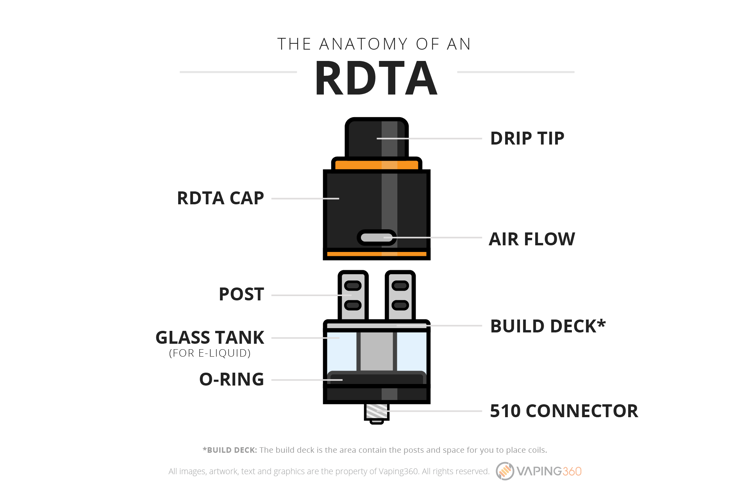
An RDTA is essentially an RDA sitting on top of an e-juice reservoir. The liquid soaks into the wicks from underneath and feeds it into the coil. They provide the best of both worlds between a dripper and a tank.
RDTAs are based on the older Genesis style of atomizers, which were popular for their flavor. Traditionally, stainless-steel mesh was used for wicking, but that has largely been replaced with organic cotton. In some ways, RDTAs are a throwback, but they also have considerable enhancements over classic Genesis atomizers.
Why use an RDTA?
For years, vapers have strived to attain that seemingly impossible “dripper in a tank” experience. Sure, there were plenty of great tanks, but most couldn’t compete with the flavor of a good RDA. Many users felt like this disparity was the result of the low deck placement of RTAs. The vapor has to travel a few extra millimeters before it gets to your mouth, and that makes a world of difference. Enter RDTAs.
Rebuildable dripping tank atomizers were the industry’s answer to this pursuit. On an RDTA, vapor doesn’t travel through a long chimney, as it does with RTAs. The mouthpiece sits directly above the coils just like a dripper. The result is more warmth and purer flavor.
Advantages of RDTAs
Compared to RTAs and RDAs, rebuildable dripping tank atomizers offer the best of both worlds. They combine the standout features of each: RDA performance and RTA capacity.
Some RDA users eventually gravitate to squonk mods, which feature an e-liquid bottle that fits into the body of the device. This method solves the capacity issue: adding a large juice reservoir to your RDA eliminates the need for constant dripping. But that's not the only solution. If you don’t want to purchase a squonking mod but don’t want to drip all day, RDTAs are the best option. They provide the experience of building and vaping an RDA with the advantage of a liquid reservoir beneath the deck.
Even if you decide to give squonking a go, RDTAs can still come in handy. Some of the best RDTAs incorporate squonk pins, offering vapers even more e-liquid capacity.
One final advantage is that RDTAs can be used like standard RDAs. If the tank runs dry and you don’t have time to refill, you can simply drip some e-liquid directly onto the coils.
Disadvantages of RDTAs
- Not low-profile devices (larger than RDAs and RTAs)
- Require more precise wicking
- Not as widely available as RTAs
- Cleaning can be tedious. With RTAs, you can flip them over when the tank is still full, and remove and clean the deck. With RDTAs, you usually need to drain the tank first.
How to use an RDTA
RDTAs follow the same general process as RTAs: install the coils and cotton, saturate the wick, fill the tank, and vape. Still, even the best RDTAs require some trial and error to attain the ideal experience. Experiment with different builds and techniques to find out what works for you. Here are some tips to get you started in the right direction:
- RDTAs require a precise cotton density to wick properly. Ensure that the cotton is neither too loose nor too thick. Also, experiment with the wick lengths. They can be short or long; whatever works best for you.
- Coil position matters. Make sure your coils are aligned with the airflow. For bottom airflow RDTAs, it’s usually best to raise the coils about 2 mm above the airflow.
- Be extra cautious of spitback. This is more of an issue with RTDAs since the deck is so close to your mouth. If the spitback is excessive, lower the wattage or refine your wicking technique.
- Avoid turning the tank upside down. While not usually an issue for RTAs, this can cause RDTAs to leak.
- Because of the wicking design, it is important to always have some liquid in the tank. Never try to vape every milliliter of liquid from an RDTA.
Tips and tricks for RTAs and RDTAs
Here are a few helpful tips to keep in mind when using an RTA or RDTA.
If you are new to building, start with an RDA, as the wicking system is much more forgiving. This lets you get comfortable building while also providing a simple introduction to wicking. But if you just want to dive right in, be sure to check out our wicking tutorial below.
When building on a bottom-airflow RTA or RDTA, the coils must span the air slots. If the coil length is too narrow, e-liquid could drip from the wicks into the air holes, leading to gurgling and minor flooding.
Ensure that your coil glows evenly from the inside out and doesn’t have any hotspots. In most cases, you can do this by gently strumming the coil with ceramic tweezers. If using dual coils, both should be perfectly in sync with each other.
Never overfill an RTA (not an issue with RDTAs). Leaving a small amount of air in the tank prevents pressure from forcing liquid into the deck when closing.
Start at a low power setting and slowly work your way up. Fresh cotton needs time to break in and fully saturate. Applying too much power early on could burn it or, if oversaturated, lead to popping and spitback.
How to wick an RTA or RDTA
Unlike RDAs, there is a slight learning curve to properly wicking an RTA or RDTA. But don’t worry; it’s easy once you understand the concept and do a few trial runs. Here are the basics.
Make sure the wick completely fills the inside of the coil. If it glides right through, you need more cotton. Ideally, there should be some resistance when pulling it through, but not so much that it starts bending the coil.
Fluff the cotton gently with tweezers to open up the fibers a bit. This method promotes more efficient wicking, allowing the liquid to travel through the cotton more easily.
Wicking ports are the slots or holes that allow liquid to enter the deck section from the tank. The most important part of the wicking process is ensuring that these ports are adequately blocked off by the wick tails. If they aren’t, flooding or gurgling is likely. However, the opposite scenario is even worse. Packing too much cotton into the ports could choke off the juice flow and lead to dry hits. Finding the perfect balance is key. Generally, the cotton should be springy (not firm) when poked with your tweezers, but without gaps.
The wicking ports on RDTA decks are usually a bit different from those on RTAs. They often have holes in the bottom of the deck that lead directly to the juice reservoir. In other words, the liquid travels upward rather than from the side. Users are divided on the best wicking method. Some prefer short wicks that simply cover the wicking holes, while others prefer long wicks that drop deep into the tank. Experiment with both and see which you prefer.
Most RTAs and RDTAs allow the user to access the build deck at any time. New builders are encouraged to frequently inspect the deck to ensure the cotton is fully saturated. It’s far better to realize a wicking error in advance than to suffer a nasty dry hit.

The MAXRAY RUSH 80K features a unique Juicy Guard system, 25 mL of e-liquid, a crystal-clear tank, and turbo mode. See how it performs in our full review.

Is the GEEK BAR PULSE 2 better than the original? We test its battery, fast charging, flavors, performance, and more in our full review.

The TASTEFLEX CRESMO 80K is an innovative disposable vape, featuring E-VALVE technology, temp control, and three power levels. Read our review to learn more.

The sixth generation of XROS pod vapes has arrived! Our VAPORESSO XROS 6 and XROS 6 MINI review covers performance, flavor, battery life, and overall value.

Learn how old you have to be to buy caffeine pouches, including federal and state age restrictions, retailer policies, and rules for minors.

Learn whether caffeine pouches are safe, including potential side effects, caffeine limits, oral health risks, and who should avoid them.

Because of declining cigarette sales, state governments in the U.S. and countries around the world are looking to vapor products as a new source of tax revenue.

A list of vaping product flavor bans and online sales bans in the United States, and sales and possession bans in other countries.

Find Your Perfect Product
Navigate our vape database precisely by customizing your filters. Find products tailored to your needs with options like price, category, and more.
Sort by:




Rely on Our Expertise
At Vaping360, we take pride in our deep expertise and years of experience in the vaping industry. Our dedicated team of professionals is committed to leveraging their extensive knowledge to meet your needs and exceed your expectations.